
Discover the best massage techniques for chronic lower back pain. Learn how targeted therapy, trigger point release, and myofascial work provide relief.
Chronic lower back pain affects millions of individuals worldwide, often stemming from long hours of sitting, poor posture, overworked lumbar muscles, or underlying spinal tightness. While medication provides temporary relief, therapeutic massage addresses the root cause by releasing tension in the surrounding soft tissues.
Understanding which massage techniques effectively target lower back pain helps individuals choose the right therapy or communicate better with licensed practitioners. This guide breaks down the best massage techniques, how they work, and essential safety considerations.
1. Why Massage Helps Relieve Lower Back Pain
Lower back pain frequently results from muscles guarding against strain, leading to severe spasms and restricted blood flow.
-
Improves Blood Circulation: Increased blood flow brings vital oxygen and nutrients to damaged muscle fibers, accelerating the natural healing process.
-
Reduces Muscle Spasms: Targeted manipulation calms hyperactive neuromuscular reflex loops, allowing cramped lower back muscles to relax.
-
Breaks Down Adhesions: Specialized strokes release scar tissue and tight fascia that restrict normal lumbar movement.
2. Top Massage Techniques for Lower Back Relief
Professional therapists utilize specific techniques designed specifically for the lumbar region and gluteal muscles:
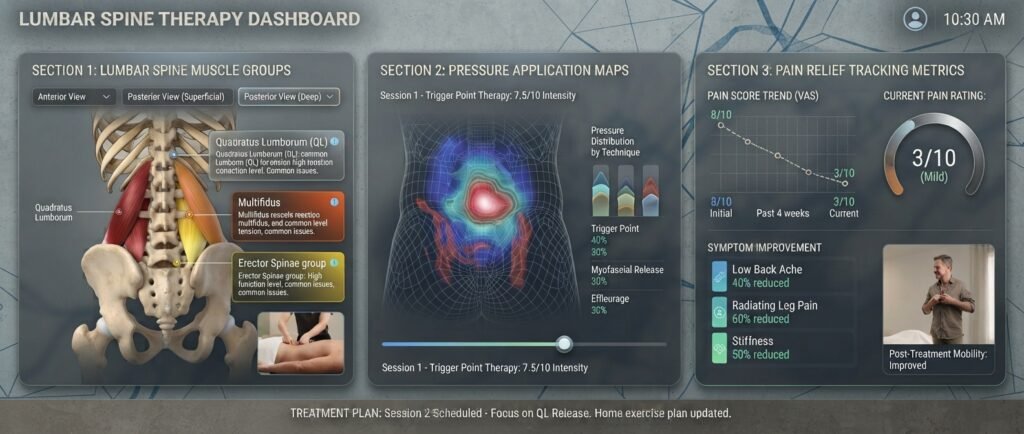
A. Myofascial Release
Fascia is the connective web wrapping around all muscles. When lower back fascia becomes tight or restricted, it pulls on the spine. Therapists apply sustained, gentle pressure to stretch and loosen this fascial network without using oils or lotions.
B. Trigger Point Therapy
Knots (trigger points) in the glutes, hips, and lower back can refer pain directly into the lumbar region. Therapists apply direct, concentrated pressure to these hyper-sensitive spots for 30 to 60 seconds until the referral pain pattern releases.
C. Deep Effleurage and Petrissage
Using slow, deep gliding strokes (effleurage) combined with firm kneading (petrissage) along the erector spinae muscles helps warm up deep lumbar tissue and flush out metabolic waste.
Massage Techniques for Lower Back Pain Comparison
| Technique | Primary Target | Best Hand Motion |
| Myofascial Release | Connective tissue and fascial restrictions | Sustained, gentle stretching pressure without oil |
| Trigger Point Therapy | Localized muscle knots referring pain | Direct, stationary pressure held for seconds |
| Deep Effleurage | Erector spinae muscles and circulation | Long, firm, gliding palm strokes along the spine |
3. Important Safety Guidelines for Lower Back Massage
-
Avoid Direct Spinal Pressure: Therapists must never apply heavy, direct pressure onto the bony vertebrae of the spinal column.
-
Address Surrounding Muscles: Lower back pain is frequently caused by tight hamstrings, hips, and glutes. A comprehensive session must include these adjacent areas.
-
Consult a Doctor First: If your lower back pain stems from a herniated disc, severe sciatica, or acute injury, always consult a physician before receiving deep pressure work.
Conclusion
Managing chronic lower back pain requires targeted soft-tissue therapy rather than random relaxation strokes. By utilizing myofascial release, trigger point therapy, and deep muscle kneading, individuals can significantly reduce lumbar tension, improve mobility, and restore everyday comfort.