
Discover what sports massage is, how it differs from regular massage, and who needs it for athletic recovery, injury prevention, and performance.
Physical training, weightlifting, running, and competitive sports place extreme repetitive stress on human muscle tissue. While rest and hydration are essential, active bodies require specialized care to maintain optimal flexibility and prevent injuries.
A sports massage is a targeted therapy designed specifically to help athletes and active individuals prepare for peak performance, recover faster after strenuous workouts, and heal from minor injuries. Understanding how sports massage operates helps you determine if this specialized treatment fits your fitness routine.
1. What Is Sports Massage?
Sports massage combines various soft-tissue techniques tailored to the physical demands of athletic training rather than simple relaxation.
-
Targeted Muscle Manipulation: Therapists focus heavily on muscle groups utilized most during your specific sport, such as legs for runners or shoulders for swimmers.
-
Combination of Techniques: Treatments integrate deep tissue work, compression, stretching, cross-fiber friction, and Swedish strokes to release tight fascia and increase joint mobility.
-
Pre- and Post-Event Focus: Unlike a standard spa massage, sports massage is categorized into distinct phases—such as pre-event warm-ups, post-event recovery, and maintenance training.
2. Key Benefits of Sports Massage
Regular sports massage therapy delivers powerful physiological and mental benefits for active individuals:
-
Accelerated Muscle Recovery: Increases blood circulation and lymphatic drainage, helping flush out lactic acid and metabolic waste products quickly after hard workouts.
-
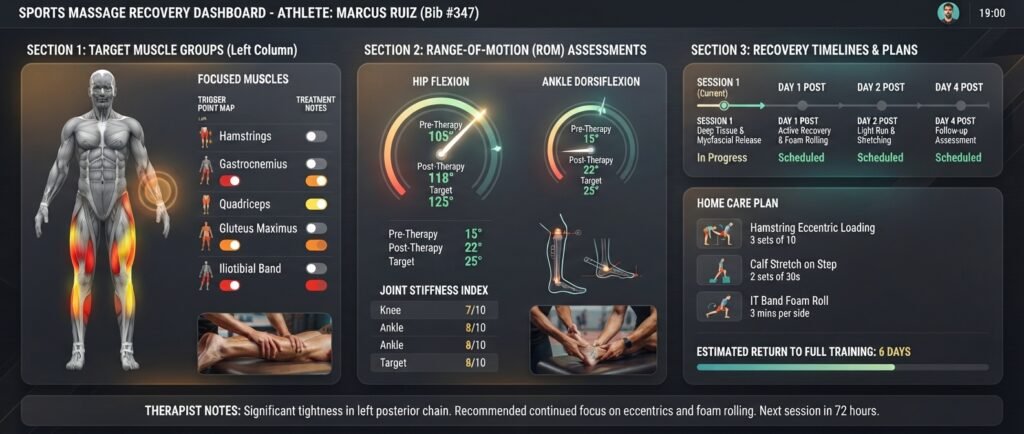
Enhanced Flexibility and Range of Motion: Stretches tight muscle fibers and connective tissue, preventing the stiffness that leads to strains and tears.
-
Early Detection of Minor Issues: Identifies microscopic knots, scar tissue, and muscle imbalances before they escalate into debilitating injuries.
3. Who Needs Sports Massage?
While the name highlights athletes, sports massage benefits a wide variety of physically active individuals:
-
Competitive and Endurance Athletes: Runners, cyclists, triathletes, and CrossFit competitors use regular sports massage to maintain peak performance and shorten downtime.
-
Weightlifters and Gym Enthusiasts: Individuals lifting heavy weights develop tight fascia and muscle imbalances that benefit greatly from targeted tissue release.
-
Desk Workers with Chronic Strains: People with sedentary jobs who experience postural tightness, tight hips, or stiff shoulders often find deep relief through sports-style therapeutic work.
Sports Massage vs. Regular Swedish Massage Comparison
| Feature | Sports Massage | Swedish Massage |
| Primary Goal | Injury prevention, flexibility, and athletic recovery | General relaxation, stress relief, and calming |
| Technique Focus | Targeted muscle groups, stretching, and friction | Long, flowing, rhythmic surface strokes |
| Pressure Level | Variable (light pre-event, deep post-event) | Generally light to moderate |
| Target Audience | Athletes, gym-goers, and active individuals | Anyone seeking everyday stress relief and relaxation |
Conclusion
A sports massage is much more than a luxury; it is an essential tool for athletic longevity, injury prevention, and rapid muscle recovery. Whether you are training for a marathon, lifting heavy weights, or managing chronic stiffness from an active lifestyle, incorporating targeted sports therapy keeps your body moving at its absolute best.