
Discover how massage therapy relieves tension headaches. Learn about trigger points, neck muscle release, and natural headache prevention strategies.
Tension headaches can turn an ordinary workday into an exhausting struggle. Characterized by a dull, aching pain or a tight band-like sensation around the forehead, temples, and back of the head, these headaches frequently stem from accumulated muscle tightness in the neck, shoulders, and scalp.
While over-the-counter painkillers offer temporary relief, they rarely address the underlying muscular root cause. Massage therapy provides a powerful, drug-free solution by releasing chronic muscle tension and calming the nervous system. Understanding how targeted massage works helps chronic headache sufferers find long-lasting relief.
1. The Connection Between Tight Muscles and Headaches
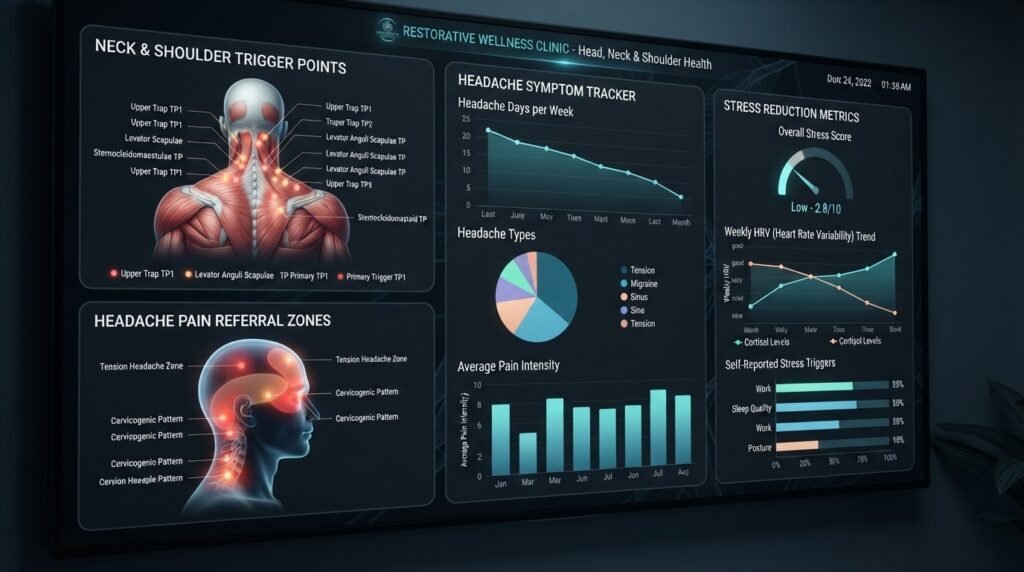
Tension headaches rarely originate entirely inside the skull; instead, they are usually referred-pain phenomena caused by tight myofascial tissues.
-
Referred Pain Patterns: Knots in the upper trapezius, suboccipital muscles (at the base of the skull), and sternocleidomastoid (SCM) neck muscles often project pain directly into the temples, forehead, and behind the eyes.
-
Restricted Blood Flow: Chronic muscle contractions in the neck restrict optimal blood circulation to the head, compounding throbbing discomfort and mental fatigue.
-
Nerve Compression: Tight cervical muscles can compress nerves running from the spine up into the scalp, triggering sharp or constant aching sensations.
2. Key Massage Techniques for Tension Headache Relief
Licensed therapists utilize specific, precise techniques to target the exact muscle groups responsible for headache pain:
A. Suboccipital Release
The suboccipital muscles sit right at the base of the skull and tighten severely from poor desk posture or screen fatigue. Therapists apply gentle, sustained upward pressure to this area, allowing the muscles to melt and release pressure off the cranial nerves.
B. Trigger Point Therapy for Trapezius and Neck
Hyper-sensitive knots in the upper shoulders (trapezius) refer pain upward. Applying steady, direct pressure to these trigger points helps break the spasm cycle and stops headache symptoms at their source.
C. Scalp and Temple Effleurage
Gentle, rhythmic circular friction around the temples combined with scalp mobilization stimulates blood flow, calms the nervous system, and releases tight cranial fascia.
Massage Techniques for Tension Headaches Comparison
| Technique | Target Area | Primary Action |
| Suboccipital Release | Base of the skull | Sustained upward pressure to relieve cranial nerve pressure |
| Trigger Point Therapy | Upper trapezius and shoulders | Direct, stationary pressure to eliminate referral knots |
| Scalp & Temple Massage | Scalp and temporal muscles | Gentle circular friction to boost local circulation |
3. Proven Benefits of Regular Massage for Headache Sufferers
-
Reduces Headache Frequency: Routine therapeutic sessions lower overall muscle tension, significantly decreasing how often tension headaches occur.
-
Lowers Stress Hormones: Massage reduces cortisol levels and activates the parasympathetic nervous system, addressing stress-induced physical tightening.
-
Improves Cervical Mobility: Releasing tight neck tissues restores normal range of motion, helping prevent future postural strain.
Conclusion
Tension headaches do not have to be an inevitable part of a stressful lifestyle. By targeting the suboccipital muscles, eliminating shoulder trigger points, and restoring neck flexibility, massage therapy offers a natural, highly effective path to lasting headache relief.