Compare AI crypto and traditional crypto. Discover the differences in utility, market volatility, risk, and which sector fits your portfolio strategy.
The cryptocurrency landscape has evolved far beyond simple peer-to-peer digital cash. While the market was originally built on traditional Layer-1 blockchains like Bitcoin and Ethereum designed for decentralized value transfer, the rapid rise of Artificial Intelligence has birthed an entirely new category: AI Cryptocurrencies.
For investors and Web3 enthusiasts, a central question arises: Should you focus on traditional foundational cryptos, or are AI-focused altcoins the superior choice for growth?
Both asset classes serve entirely different roles in a diversified portfolio. This comprehensive guide compares AI crypto and traditional crypto across utility, risk, market behavior, and long-term potential to help you decide which is better suited for your strategy.
1. Understanding Traditional Crypto
Traditional cryptocurrencies include foundational Layer-1 coins (like Bitcoin and Ethereum), decentralized store-of-value assets, and legacy utility tokens designed primarily for monetary settlement, gas fees, or decentralized finance (DeFi) governance.
-
Core Purpose: To function as trustless, censorship-resistant digital money, global payment rails, or foundational settlement layers for decentralized applications.
-
Risk Profile: Generally lower relative volatility compared to micro-cap altcoins, with Bitcoin serving as the macroeconomic bellwether of the entire digital asset market.
-
Market Maturity: Highly liquid, heavily institutionalized via spot ETFs, and deeply integrated into global financial frameworks.
2. Understanding AI Crypto
AI cryptocurrencies (often referred to as Decentralized AI or DeAI tokens) power blockchain protocols that integrate machine learning, decentralized GPU compute networks, autonomous software agents, and automated data indexing.
-
Core Purpose: To decentralize the artificial intelligence stack—providing open-source alternatives to Big Tech cloud monopolies for computing power, neural training, and automated agent transactions.
-
Key Examples: Bittensor ($TAO), Render Network ($RENDER), Fetch.ai ($FET), and Akash Network ($AKT).
-
Risk Profile: Higher volatility, heavily tied to macro tech narratives, and dependent on rapid technological adoption.
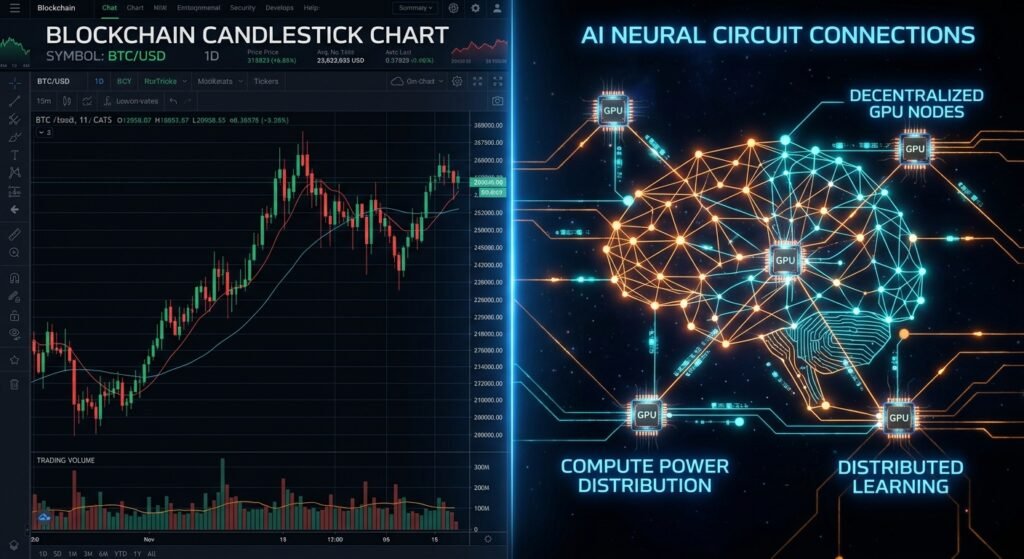
3. Direct Comparison: AI Crypto vs. Traditional Crypto
| Evaluation Metric | Traditional Crypto (e.g., Bitcoin, Ethereum) | AI Crypto (e.g., Bittensor, Render) |
| Primary Utility | Store of value, digital money, smart contract settlement | Decentralized AI compute, neural networks, autonomous agents |
| Market Volatility | Moderate to high during macro shifts | Higher volatility with rapid narrative-driven price swings |
| Institutional Adoption | High (Spot ETFs, corporate balance sheets, banking integration) | Growing, but largely driven by tech venture capital and retail Web3 funds |
| Revenue & Demand Model | Driven by transaction fees, network security, and monetary premium | Driven by real-world enterprise GPU demand and AI developer usage |
| Portfolio Role | Core defensive holding and macroeconomic foundation | High-growth, speculative technology allocation |
4. Key Advantages and Drawbacks of Each Sector
Traditional Crypto: Pros & Cons
-
Pros: Unmatched network security, deep market liquidity, established regulatory clarity, and status as digital gold.
-
Cons: Slower percentage growth potential compared to micro-caps; does not directly capture the explosive technological upside of the artificial intelligence boom.
AI Crypto: Pros & Cons
-
Pros: Direct exposure to the multi-trillion-dollar artificial intelligence sector; solves real-world global compute and infrastructure bottlenecks.
-
Cons: Highly sensitive to AI hype cycles; unproven long-term tokenomics models; intense competition from centralized tech giants.
5. Which One Is Better for Your Portfolio?
Rather than viewing the choice as an “either/or” decision, successful Web3 investors typically view these categories as complementary parts of a balanced strategy:
-
Build a Solid Foundation First: Allocate the majority of your core portfolio (e.g., 60%–80%) to traditional, blue-chip assets like Bitcoin and Ethereum to anchor your risk profile against market downturns.
-
Add Tactical AI Exposure: Allocate a smaller, controlled percentage (e.g., 10%–20%) to top-tier utility AI altcoins to capture high-growth technological trends without exposing your entire portfolio to speculative risk.
Conclusion
Neither AI crypto nor traditional crypto is universally “better”—they serve entirely different investment theses. Traditional crypto provides monetary sovereignty, liquidity, and a reliable store of value, while AI crypto offers high-growth exposure to the future of decentralized machine learning and cloud infrastructure. Balancing both allows you to capture macro security alongside cutting-edge technological innovation.