
Discover the key differences between deep tissue massage and Swedish massage. Compare pressure levels, benefits, and find out which one suits your needs.
Choosing the right massage therapy style depends heavily on your personal wellness goals, pain levels, and preference for relaxation. While both techniques use similar foundational strokes, they target completely different layers of muscle tissue and produce distinct physical outcomes.
Understanding the core differences between deep tissue massage and Swedish massage helps you select the ideal treatment for stress relief, muscle recovery, or chronic pain management. This guide breaks down technique variations, pressure levels, and primary benefits.
1. What Is Swedish Massage?
Swedish massage is the most popular and widely offered massage technique globally, focusing primarily on general relaxation and stress reduction.
-
Gentle to Moderate Pressure: Therapists use light-to-moderate pressure tailored to melt away superficial surface tension and calm the nervous system.
-
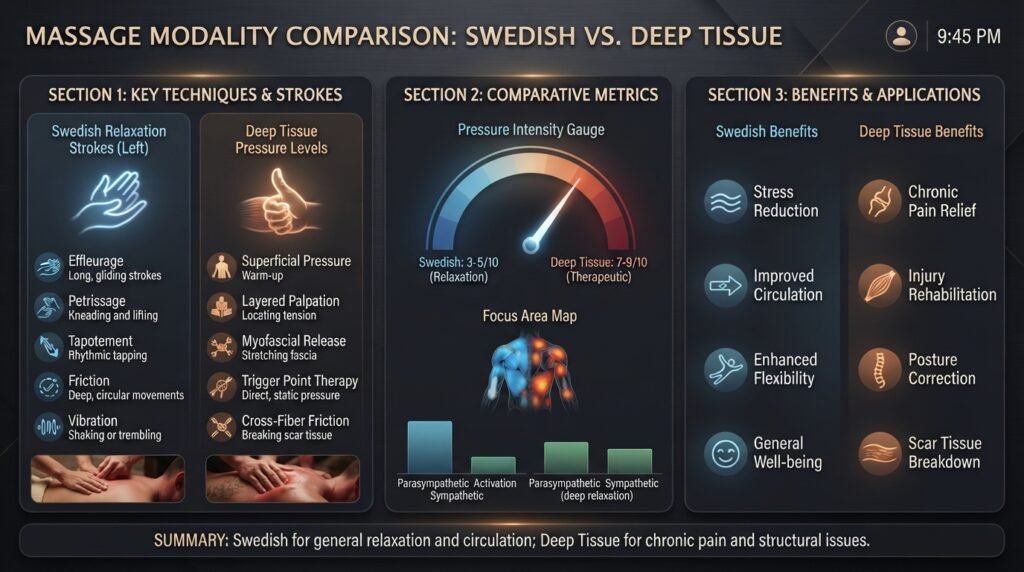
Flowing Stroke Movements: Treatments incorporate long, sweeping glides (effleurage), kneading (petrissage), and rhythmic tapping to boost circulation and flexibility.
-
Ideal for Beginners: Because strokes remain smooth and gentle, Swedish massage serves as the perfect entry-level treatment for individuals seeking pure mental relaxation.
2. What Is Deep Tissue Massage?
Deep tissue massage targets the deeper layers of muscle tissue, tendons, and fascia (the connective tissue surrounding muscles).
-
Firm and Focused Pressure: Therapists use intense, concentrated pressure, knuckles, and elbows to reach chronic muscle knots and adhesions.
-
Rehabilitation Focus: Rather than focusing solely on relaxation, deep tissue work aims to break down scar tissue, correct postural imbalances, and relieve severe muscle stiffness.
-
Post-Massage Soreness: It is normal to experience mild muscle tenderness for a day or two following a deep tissue session as tight fibers realign.
Deep Tissue vs. Swedish Massage Comparison
| Feature | Swedish Massage | Deep Tissue Massage |
| Primary Goal | General relaxation, stress relief, and circulation | Relieving chronic pain, tension knots, and injury recovery |
| Pressure Level | Light to moderate | Firm to intense |
| Tissue Focus | Superficial and outer muscle layers | Deep muscle layers and connective fascia |
| Techniques Used | Long flowing glides, kneading, and rhythmic tapping | Slow strokes, direct thumb pressure, and friction |
3. How to Choose the Right Massage for Your Needs
Selecting between these two styles depends on what your body requires on any given day:
-
Choose Swedish Massage if: You feel mentally exhausted, suffer from general everyday stress, prefer a gentle touch, or want to unwind after a long week.
-
Choose Deep Tissue Massage if: You experience chronic lower back pain, suffer from stiff shoulders due to desk work, or need targeted recovery after intense athletic training.
Conclusion
Both deep tissue and Swedish massage offer incredible health benefits, but they serve entirely different purposes. Whether you seek the gentle, restorative relaxation of a Swedish session or the targeted pain relief of deep tissue therapy, understanding these key differences ensures you get the most out of your next spa visit.