Master testnet crypto airdrops with this beginner-friendly guide. Learn how to collect testnet faucet tokens, interact with dApps, and earn free crypto without spending real money.
Crypto airdrops offer one of the most effective ways for Web3 enthusiasts to earn free tokens, but many mainnet campaigns require gas fees or capital bridge deposits. Testnet crypto airdrops, however, are 100% free of capital risk.
Before launching on mainnet, new Layer-1 and Layer-2 blockchains release “Testnets”—simulated environments where developers test smart contract speeds and fix bugs. To stress-test their networks under heavy traffic, development teams incentivize early users with points and future token allocations.
If you want to start earning crypto without spending real money, this comprehensive beginner guide covers how testnets work, the tools you need, step-by-step participation rules, and essential security practices.
What Is a Testnet Crypto Airdrop?
A Testnet is an experimental, risk-free version of a blockchain network designed for testing. The tokens used on a testnet (e.g., Goerli ETH, Sepolia ETH, or custom test tokens) have zero financial value and can be claimed for free from public portals called “faucets”.
When you interact with testnet decentralized apps (dApps) such as swapping tokens, bridging assets, or testing decentralized exchanges—your wallet activity is logged on-chain. When the project eventually launches its official “Mainnet,” top active testnet participants are rewarded with real, tradeable cryptocurrencies.
What You Need to Get Started (The Beginner Toolkit)
Before joining testnet campaigns, set up a dedicated digital workspace:
-
A Dedicated “Burner” Web3 Wallet: Install a browser extension wallet like MetaMask, Rabby, or Phantom. Never use your primary savings wallet for airdrop testing.
-
Social Media Profiles: Prepare active accounts on X (Twitter), Discord, and Telegram. Most testnet faucets require social verification to prevent automated bot spam.
-
A GitHub Account: Many modern testnets require a GitHub profile to grant testnet tokens and filter out Sybil bots.
Step-by-Step Guide: How to Participate in a Testnet Airdrop
  [ Step 1: Set Up Wallet ] ---> [ Step 2: Claim Faucet Tokens ]
                                                │
  [ Step 4: Track Progress ] <--- [ Step 3: Complete dApp Tasks ]
Step 1: Switch Your Wallet to the Testnet Network
Open your Web3 wallet settings and toggle “Show Test Networks” on. Add the custom network details (RPC URL, Chain ID) provided by the official project documentation.
Step 2: Request Free Faucet Tokens
Navigate to the project’s official testnet faucet page, enter your public wallet address, and complete captcha/social verifications. The faucet will transfer free testnet tokens to your wallet.
Step 3: Perform Core On-Chain Tasks
To build a consistent activity profile, execute standard decentralized finance actions on the testnet:
-
Swaps: Exchange one test token for another on the network’s test exchange.
-
Bridging: Transfer test tokens between different testnet layers.
-
Liquidity Provisioning: Deposit testnet assets into test pools.
-
Feedback Submission: Report bugs, broken UI buttons, or errors on the project’s Discord feedback channels.
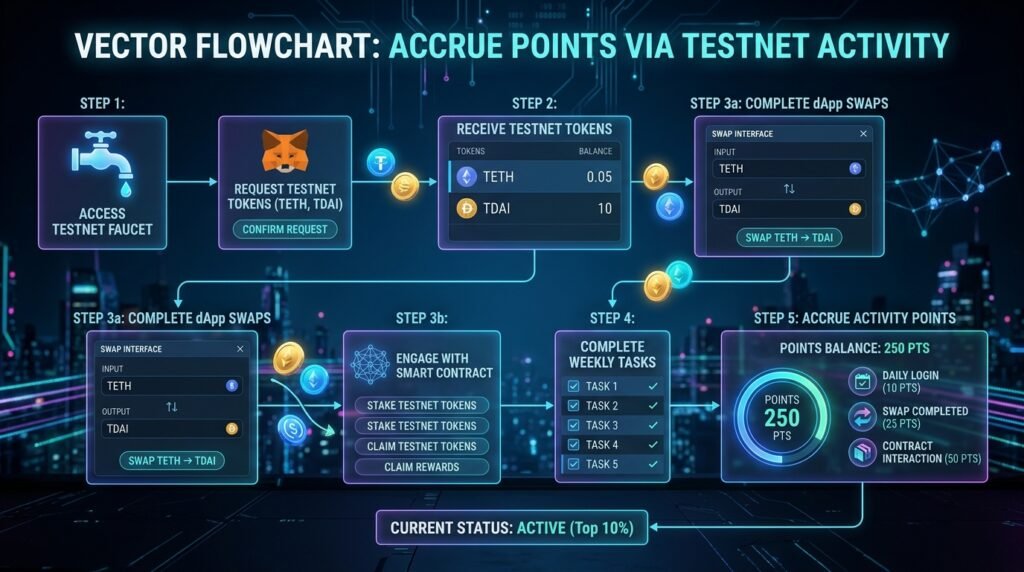
Step 4: Complete Task Quests on Galxe, Zealy, or Layer3
Projects track community activity using quest hubs like Galxe or Zealy. Complete social follow quests, educational quizzes, and wallet-linking tasks to collect extra activity points.
How Projects Score Testnet Participants in 2026
Modern blockchain protocols use advanced scoring metrics to prevent multi-wallet farming and reward genuine users:
| Scoring Factor | What Projects Look For | How to Maximize Score |
| Consistency Over Time | Activity spread across multiple days/weeks | Interact once or twice a week rather than 50 times in one day. |
| Diversity of Actions | Using multiple dApp features (swapping, bridging, staking) | Test all available platform features instead of repeating one action. |
| Social Verification | Linked Discord, X, and GitHub profiles | Keep active, verified social accounts linked to quest platforms. |
| Sybil Prevention Checks | Filtering out bot clusters and duplicate IPs | Use a single, real wallet with organic transaction history. |
Safety Rules: Avoiding Testnet Airdrop Scams
Because testnet farming attracts heavy interest, scam artists frequently deploy phishing portals. Always follow these protective measures:
-
Never Give Away Your Private Keys or Seed Phrase: No legitimate testnet, developer, or support admin will ever ask for your wallet recovery phrase.
-
Never Spend Real Crypto for Testnet Tokens: Testnet tokens are fundamentally free. If a site demands mainnet ETH or real crypto to release test assets, it is a scam.
-
Double-Check Web Links: Always access testnet links directly from verified project documentation, official X accounts, or recognized tracking portals like CoinGecko or Airdrops.io.
-
Isolate Your Main Capital: Keep your real investments on a hardware wallet or isolated account that never connects to testnet platforms.
Conclusion
Testnet crypto airdrops provide the ideal starting ground for beginners to gain hands-on Web3 experience, learn smart contract navigation, and earn zero-cost token rewards. By setting up a dedicated burner wallet, collecting free faucet tokens, remaining consistent across testing phases, and maintaining strict digital security, you can position yourself for high-potential token distributions.