Why is the crypto market crashing today? Discover the core macro drivers, U.S. economic data shocks, spot ETF outflows, and leveraged liquidation triggers behind the latest drop.
The cryptocurrency market has experienced sudden and intense volatility. Within mere minutes during recent trading sessions, tens of billions of dollars were wiped from the total digital asset market capitalization, sending Bitcoin ($BTC) tumbling back below $80,000 and triggering widespread sell-offs across major altcoins like Ethereum ($ETH) and Solana ($SOL).
If you are wondering why prices dropped so abruptly and whether this is a short-term shakeout or a longer macroeconomic trend, here is a breakdown of the primary reasons behind the latest crypto market crash.
1. Hotter-Than-Expected Macro Data & Rate Hike Fears
The immediate catalyst behind the latest flash crash was the release of stronger-than-expected U.S. labor market and economic reports.
-
The Trigger: A surprisingly resilient U.S. jobs report dampened investor expectations for aggressive Federal Reserve interest rate cuts.
-
The Impact: When economic data signals persistent inflation or labor tightness, global markets quickly price in “higher-for-longer” interest rates or potential rate hikes. Risk-on assets—including technology stocks and cryptocurrencies—immediately pull back as capital shifts toward rising Treasury bond yields.
2. Leveraged Liquidation Cascades
The fast speed of the crash was largely driven by derivatives market leverage.
-
Prior to the sudden dip, perpetual futures markets were heavily skewed toward over-leveraged long positions expecting a breakout.
-
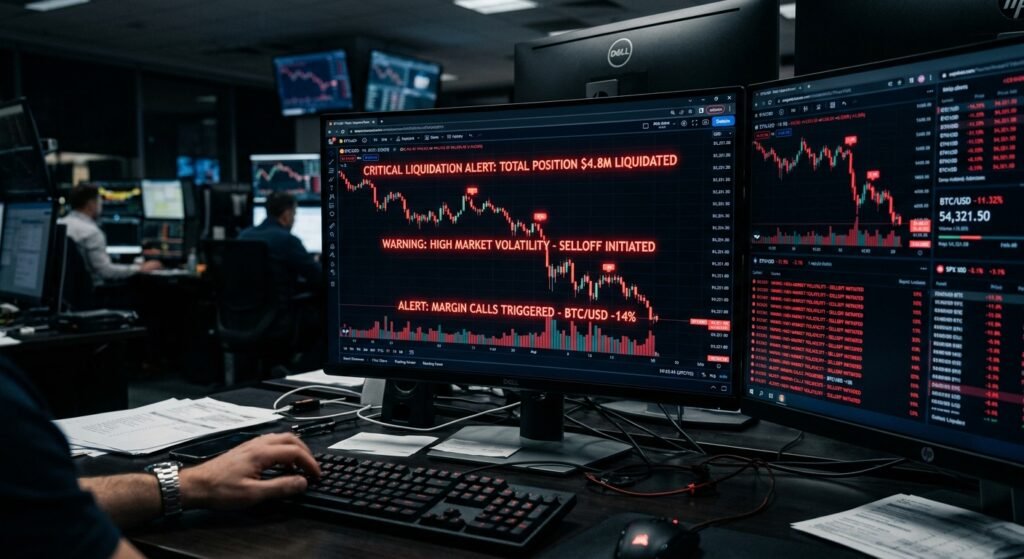
As spot prices took an initial hit from macro economic news, long positions hit their stop-loss and margin call thresholds.
-
This triggered an automated “liquidation cascade,” forcing exchanges to automatically sell off assets into an already falling market, multiplying the downward price momentum within minutes.
3. Sustained ETF Outflows & Institutional Profit-Taking
Spot Bitcoin and Ethereum ETFs have introduced billions in institutional liquidity, but they have also tied crypto directly to traditional Wall Street sentiment.
-
ETF Net Outflows: Institutional funds recorded multi-day net capital outflows as institutional asset managers reduced risk exposure in response to global geopolitical uncertainties and rising bond yields.
-
Whale Distribution: On-chain tracking showed large wallet holders (“whales”) distributing assets into short-term rallies to take profit or hedge against broader macroeconomic uncertainty.
4. Geopolitical Friction & Oil Inflation Pressures
Broader macroeconomic sentiment has been weighed down by persistent geopolitical friction in energy-rich regions.
-
Energy & Crude Spikes: Escalations impacting international shipping corridors have pushed crude oil prices higher.
-
Inflationary Ripple Effect: Higher energy prices directly increase production and shipping costs globally, fueling broader headline inflation and complicating central bank policies worldwide.
Key Market Factors Behind the Crash: At a Glance
| Factor | Primary Trigger | Market Impact |
| Macro Economic Data | Strong U.S. jobs & economic reports | Reduced rate-cut expectations; yields rise |
| Derivatives Leverage | Over-leveraged long positions | Cascade liquidations accelerate sharp drop |
| Institutional Flows | Net ETF outflows & whale profit-taking | Direct reduction in spot market liquidity |
| Geopolitical Strain | Oil price pressure & global market anxiety | Global risk-off rotation into cash/bonds |
What Comes Next for the Crypto Market?
While sudden corrections feel alarming, historical crypto cycles show that pre-breakout shakeouts are common during consolidation phases.
-
Key Support Levels to Watch: Analysts are watching $78,000 as a vital structural floor for Bitcoin. Holding this level keeps the broader multi-month bullish structure intact.
-
Relative Strength Indicators (RSI): Sharp flash crashes often push short-term technical indicators (like the RSI) into deeply “oversold” territory, creating potential accumulation windows for long-term investors once macro jitters settle.
Conclusion
The latest crypto market crash was primarily triggered by a confluence of hawkish macroeconomic data, unexpected ETF capital outflows, and automated leverage liquidations. Understanding these underlying drivers helps investors separate short-term market noise from long-term fundamental trends. Always practice strict risk management, avoid excessive trading leverage, and maintain a long-term investment horizon.