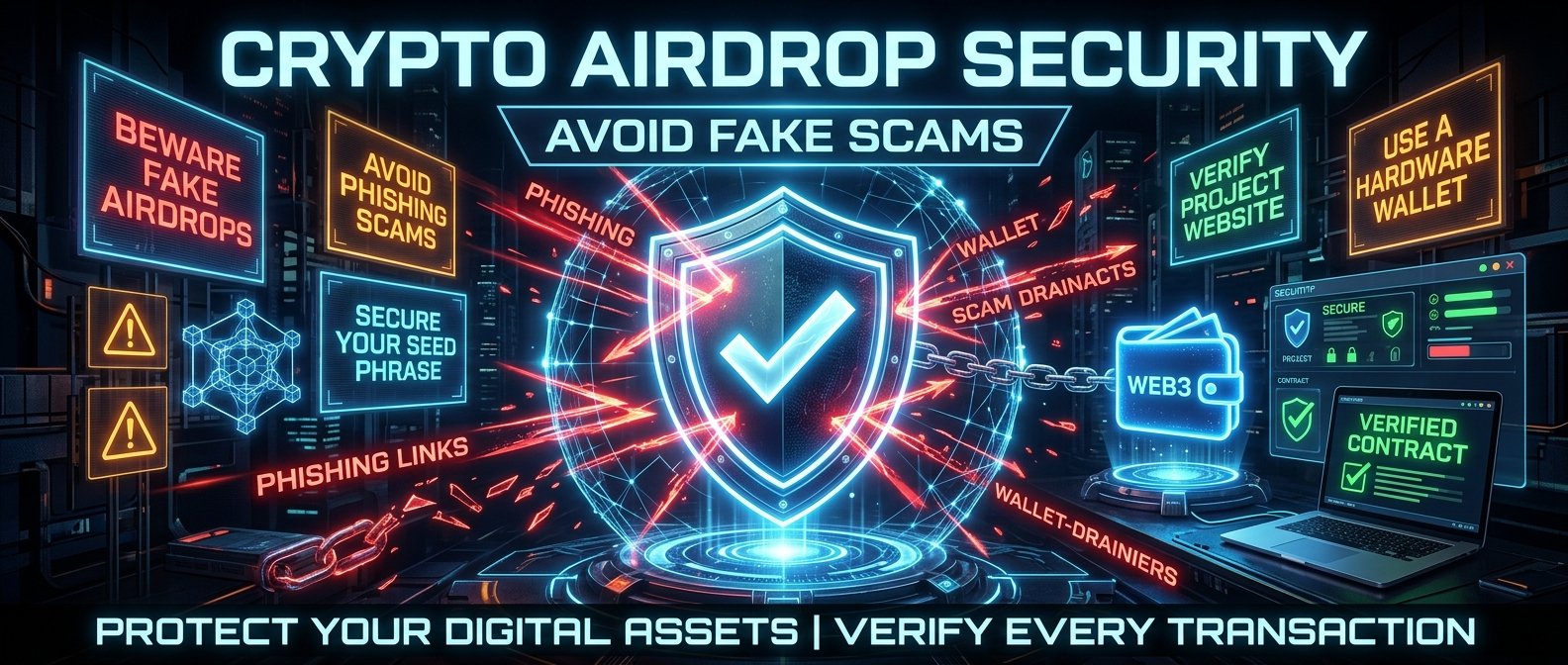
Learn how to spot fake crypto airdrops, avoid malicious wallet drainers, and protect your digital assets with essential Web3 security rules.
The excitement of claiming free token distributions makes airdrops one of the most popular engagement strategies in Web3. Unfortunately, this enthusiasm also makes airdrops a primary target for sophisticated scammers. Modern airdrop scams use pixel-perfect cloned phishing sites, AI-generated social media buzz, and automated wallet-drainer scripts designed to empty user balances within seconds.
Knowing how to identify red flags and handle unverified token drops safely is essential for protecting your portfolio. This guide breaks down the anatomy of airdrop scams and outlines practical rules to keep your funds secure.
1. The Two Main Vectors of Airdrop Scams
Understanding how scammers operate helps you recognize traps before they compromise your funds:
-
Vector 1: The Phishing Claim Site: Attackers distribute random tokens or share links to fake claim pages that mimic legitimate projects down to the last detail. When you connect your wallet and click “Claim,” a malicious smart contract interaction requests permissions that instantly sweep your token balances.
-
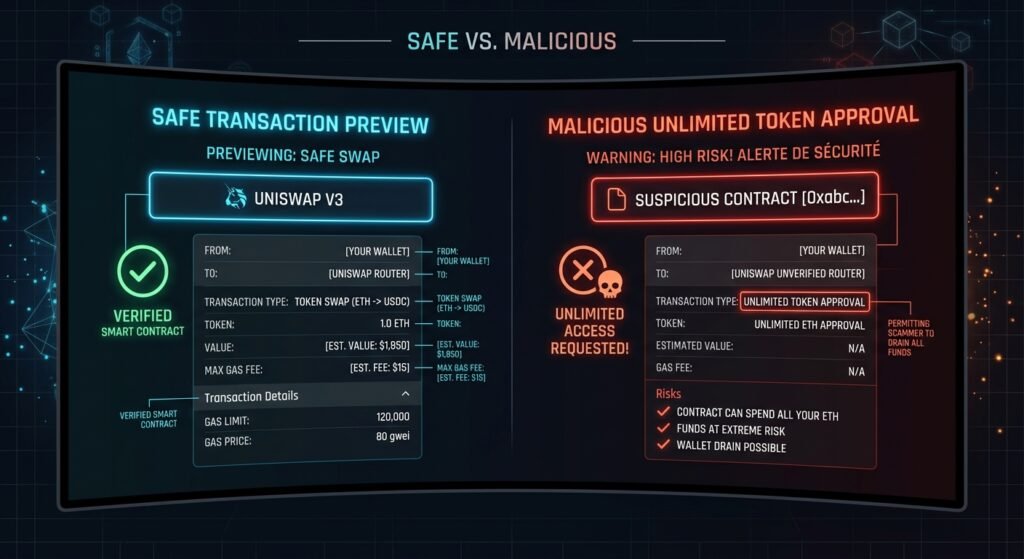
Vector 2: Malicious Smart Contract Approvals: Rather than stealing passwords, modern scams trick you into signing an approval transaction. This grants an unauthorized contract unlimited permission to spend specific tokens from your wallet now or in the future.
2. Critical Red Flags to Watch Out For
-
Upfront Fee Demands: A real airdrop never requires you to send crypto or pay an activation fee to “unlock” your reward. If a site demands native gas coins sent to a random address or an upfront payment, it is a scam.
-
Seed Phrase Requests: Legitimate projects, exchanges, and airdrop claim portals will never ask for your 12-word or 24-word recovery seed phrase. Anyone asking for your private key is attempting a direct theft.
-
Urgency and Hype Tactics: Scammers rely heavily on artificial scarcity (“Claim within 10 minutes before allocation expires!“) to bypass your critical thinking. Real opportunities allow time for independent verification.
-
Suspicious DMs and Sponsored Ads: Never trust airdrop links sent via direct messages on Telegram, Discord, or X (Twitter), nor sponsored search engine ads promoting sudden claims.
3. Step-by-Step Rules to Stay Safe
-
Use a Dedicated “Burner” Wallet: Never connect your primary cold storage or main savings wallet to a new airdrop claim page. Always use a secondary browser wallet funded with minimal gas.
-
Verify URLs Independently: Navigate to airdrop portals through official project documentation, verified social channels, or trusted trackers (like CoinGecko or CoinMarketCap) rather than clicking random links.
-
Inspect What You Sign: Use modern wallets featuring built-in transaction simulation layers (or security extensions like Wallet Guard or Pocket Universe) that translate complex smart contract requests into plain English before you approve them.
-
Revoke Stale Permissions: Regularly audit and clean out old smart contract allowances using tools like Revoke.cash to ensure forgotten dApps cannot access your funds later.
Airdrop Security Checklist Summary
| Safety Step | Action Item | Golden Rule |
| Infrastructure | Use a compartmentalized burner wallet | Never connect your main savings or cold storage wallet to a claim page. |
| Sourcing | Cross-check official project channels | Never click links from social media DMs, pop-ups, or search ads. |
| Claiming | Verify transaction prompt details | Never send upfront payments or deposits to “unlock” tokens. |
| Maintenance | Clean up smart contract allowances | Regularly revoke lingering spending permissions using tools like Revoke.cash. |
Conclusion
Protecting yourself from fake airdrops comes down to slowing down, maintaining strict wallet hygiene, and treating unverified links as hostile. By utilizing burner wallets, verifying official domains, and reading transaction prompts carefully, you can safely participate in legitimate token distributions without risking your core crypto portfolio.